This year I'm not involved with preparing a New Year's Eve worship service and I am thankful. I've always found New Year's Eve to be a strange time, especially because my New Year has already begun. Let me explain with an emphasis upon that which is new.
For our spiritual ancestors, the Israelites, the Passover marked the beginning of that which is new. It was always celebrated in the Spring, when new life was beginning, somewhere toward the end of March and the beginning of April. Passover was marked by the phases of the moon and the vernal equinoxt; hence the indefinite date.
The event they celebrated year after year was their unexpected yet longed for deliverance from slavery (Exodus 12:2 and Exodus 13:4, etc.). But it was more than that. It was a celebration of freedom and of God's unmerited grace.
This wonderful annual celebration also marked the time when the Lord Jesus gathered His disciples and brought them a new reason for celebrating. During the Passover immediately prior to His crucifixion He told them He would not eat it again nor would He drink of the fruit of the vine until the Passover was fulfilled in the kingdom of God (Revelation 19:6-9). During the meal He took the unleavened bread, broke it and declared, "This is My Body, which is given for you." At the end of the meal, as the final cup of wine was about to be passed among them, He said, "Drink of this, all of you. This cup is the New Covenant in my blood" (Luke 22:14-23; Matthew 26:26-29).
Because the promises of the Passover were fulfilled in the death of the Lamb of God (John 1:29-34), most of us Christians gather weekly, especially on the first day of the seven-day week to celebrate His resurrection and to share the Supper He initiated on that final Passover. In Jesus we have a New Covenant. In His Supper we begin each week anew, with our sins forgiven and our hope strengthened. This is also why we mark the Feast of the Resurrection (Easter) as our first and greatest celebration. This is why each Sunday is another Easter for us.
Of course, we also celebrate the start of another new year, but not on December 31. Our annual celebrations are marked by three great events: the Father's gift of His Son, the Son's gift of His life and the Holy Spirit's outpouring of His presence—Christmas, Easter and Pentecost. So our new year of rejoicing and celebration already began several weeks ago as we marked Jesus' first coming, His coming among us in His Supper and His certain promise of returning to raise us up to glory—the season we call Advent.
All this is why I'm not very excited about all the hoopla the unbelieving world wraps around December 31. Oh, I suppose I'll join my fellow believers for a quiet time of prayer and meditation upon God's Word, but I'll then go to bed early and let the others stay up to drink champagne and dance.
Happy New Year—in Jesus!
Thursday, December 31, 2009
Wednesday, December 30, 2009
Calmly Preparing for the New Year
When David fled the anger of King Saul, some men joined him "who understood the times" (1 Chronicles 12:32). We would all like to have such men around, especially as we move into another new year.
Jesus challenged the crowds who followed him to interpret the signs. He told them that when they see a cloud rising in the west, they say, "It's going to rain," and it does. In the same way they interpreted a south wind to be a sign that it was going to be hot. We in our day are much more sophisticated at forecasting the weather, but like the people of Jesus' day, we not good at interpreting and understanding the times (Luke 12:54-56). Why not? Perhaps it is because we have not adequately prepared ourselves.

As we move into the new year with a desire to understand the times, here's a Biblical way to prepare yourself. John the Baptist called upon the people of his day to "repent, for the kingdom of heaven is at hand" (Matthew 3:2). To repent is to change your mind, to feel sorrow for your sins and turn away from them. The next step is to accept the forgiveness of sins offered to you in the Good News of Jesus Christ. You are to do this daily by
Jesus challenged the crowds who followed him to interpret the signs. He told them that when they see a cloud rising in the west, they say, "It's going to rain," and it does. In the same way they interpreted a south wind to be a sign that it was going to be hot. We in our day are much more sophisticated at forecasting the weather, but like the people of Jesus' day, we not good at interpreting and understanding the times (Luke 12:54-56). Why not? Perhaps it is because we have not adequately prepared ourselves.

As we move into the new year with a desire to understand the times, here's a Biblical way to prepare yourself. John the Baptist called upon the people of his day to "repent, for the kingdom of heaven is at hand" (Matthew 3:2). To repent is to change your mind, to feel sorrow for your sins and turn away from them. The next step is to accept the forgiveness of sins offered to you in the Good News of Jesus Christ. You are to do this daily by
- examining your heart in the light of the commandments. One commandment a day is sufficient to remind you that you have not loved your God with all your heart and soul and you certainly have not always loved your neighbors, friends and family as you love yourself.
- recalling the Good News of God's love in Christ, as the Psalmist puts it, "The LORD is close to the brokenhearted and saves those who are crushed in spirit" (Psalm 34:18).
- returning to your Baptism, even as St. Paul says, "We were therefore buried with him through baptism into death in order that, just as Christ was raised from the dead through the glory of the Father, we too may live a new life" (Romans 6:4).
Now you are ready to read the paper, look at the internet or listen to TV to learn what is going on in this world. As you do you will recall that the world about us—at all levels—is at enmity with God. It is full of hypocrisy, false idols and deception. In the midst of this, you will wait on the LORD. He will reveal His will and plan for your life, just as He did to the shepherds and the Magi who knelt before the Child of Bethlehem. He will post signs for you to read and to follow. He will close paths He does not want you to travel.
Here are some Psalm verses from God's Word to guide you prepare to enter this new year.
- But I trust in you, O LORD; I say, "You are my God. My times are in your hands; deliver me from my enemies and from those who pursue me. Let your face shine on your servant; save me in your unfailing love" (Psalm 31:14-16).
- Blessed is the man who does not walk in the counsel of the wicked or stand in the way of sinners or sit in the seat of mockers. But his delight is in the law (teaching) of the LORD and on his law he meditates day and night. He is like a tree planted by streams of water, which yields its fruit in season and whose leaf does not wither. Whatever he does prospers" (Psalm 1:1-3).
Do not be afraid, then, of anything that the new year holds, for you are a child of God in Christ and when Christ returns you will dwell with Him and His family in ages without end. Until that day, carry on. The best is yet to come.


Tuesday, December 29, 2009
Journeys, Jonah, Jesus and Signs
We took the greater part of Monday to return from south Texas to Houston. As we approached Victoria from the south on Hwy. 77, we saw some signs that said there was an accident ahead. Then the whole northbound side was closed with more signs and a barrier. We had no alternative but to detour eight miles out of our way through Victoria. Its strange how signs will direct you to a road you never expected to travel.
So it was with the shepherds of Bethlehem. The gleaming angelic visitor said, "And this will be a sign for you: you will find a baby wrapped in swaddling cloths and lying in a manger" (Luke 2:12).
After the messenger had left they went on a most unexpected journey back into the tiny village where they saw the baby and his mother exactly as they were told. This was a story they had to tell, one I can imagine they retold again and again for the rest of their lives.
What part do signs play in the Bible? This is a large topic.

During His public ministry the Lord Jesus was challenged by the ultra-conservative Pharisees. If he was to be taken seriously they needed a sign from heaven, that is direct from God. Jesus pointed them to the red sky in the morning, the universal sign that a storm is approaching. "You know how to interpret the appearance of the sky," he went on, "but you cannot interpret the signs of the times. An evil and adulterous generation seeks for a sign, but no sign will be give to it except the sign of Jonah" (Matthew 16:3-4).
What in the world did that mean? Jesus explained to his disciples that Jonah was in the belly of of a fish for three days and nights before being vomited onto dry land and sent off to preach a message of repentance to Nineveh (Jonah 1:17).
Shortly before returning to heaven Jesus opened the Scriptures to his disciples and taught them again that it was written that the Son of Man was to suffer, die and rise from the dead on the third day. Then they were to preach a message of repentance and forgiveness of sins to all nations beginning in Jerusalem (Luke 24:45-48).
The church, the living body of Christ on earth, with her message of Jesus' cross and resurrection is a sign to all. The promised Christ has come. God's love and mercy is offered and available to anyone who will turn from sin.
More on this another time.
So it was with the shepherds of Bethlehem. The gleaming angelic visitor said, "And this will be a sign for you: you will find a baby wrapped in swaddling cloths and lying in a manger" (Luke 2:12).
After the messenger had left they went on a most unexpected journey back into the tiny village where they saw the baby and his mother exactly as they were told. This was a story they had to tell, one I can imagine they retold again and again for the rest of their lives.
What part do signs play in the Bible? This is a large topic.

During His public ministry the Lord Jesus was challenged by the ultra-conservative Pharisees. If he was to be taken seriously they needed a sign from heaven, that is direct from God. Jesus pointed them to the red sky in the morning, the universal sign that a storm is approaching. "You know how to interpret the appearance of the sky," he went on, "but you cannot interpret the signs of the times. An evil and adulterous generation seeks for a sign, but no sign will be give to it except the sign of Jonah" (Matthew 16:3-4).
What in the world did that mean? Jesus explained to his disciples that Jonah was in the belly of of a fish for three days and nights before being vomited onto dry land and sent off to preach a message of repentance to Nineveh (Jonah 1:17).
Shortly before returning to heaven Jesus opened the Scriptures to his disciples and taught them again that it was written that the Son of Man was to suffer, die and rise from the dead on the third day. Then they were to preach a message of repentance and forgiveness of sins to all nations beginning in Jerusalem (Luke 24:45-48).
The church, the living body of Christ on earth, with her message of Jesus' cross and resurrection is a sign to all. The promised Christ has come. God's love and mercy is offered and available to anyone who will turn from sin.
More on this another time.
Saturday, December 26, 2009
The Holy Family’s Journey And Ours
When we visited Egypt some years back our tour group was led into a Coptic Church in Cairo. There in the narthex was a map of the Holy Family's journey during the years they stayed in Egypt to avoid the wrath of King Herod. As you will remember, Joseph was told by an angel to take Mary and the Child and flee to Egypt (Matthew 2:23). Being a Christian from the West, I had never known anything about this ancient tradition or anything about the sites held sacred by the Christians living in that ancient land.

Be Thou There: The Holy Family’s Journey in Egypt - The Sacred Geography of the Coptic Church is a summary of those beliefs and traditions. 
Whatever I may make of this tradition, I am reminded by it that many families are traveling during this busy Christmas/New Year holiday season. Massive snow storms in many places have made this very difficult. The system dumped 14 inches on Oklahoma City and left even Dallas with a light covering for Christmas. Normally our family would be traveling at this time of the year. I can remember other years when we had perilous journeys either going or coming from Colorado.
In all of this I am grateful for reminders that our Lord Jesus whose birth we celebrate during these days sends His holy angels to watch over and keep us in His care. For instance, consider the words of 120 year old Moses as the Israelites prepared to enter the Holy Land a second time. Powerful enemies and fortified cities blocked their way, but Moses, speaking for the Lord Jesus, said,
"Be strong and courageous, do not be afraid or tremble at them, for the Lord your God is the one who goes with you. He will not fail you or forsake you" (Deuteronomy 31:6).
So what ever storm faces you today or in the new year, find your comfort and strength in the guiding and leading hand of our loving Savior whose coming among us we celebrate and who says now, "I am with you always, to the end of the age" (Matthew 28:20).
In Him we can look forward to a blessed new year whatever our circumstances.
In all of this I am grateful for reminders that our Lord Jesus whose birth we celebrate during these days sends His holy angels to watch over and keep us in His care. For instance, consider the words of 120 year old Moses as the Israelites prepared to enter the Holy Land a second time. Powerful enemies and fortified cities blocked their way, but Moses, speaking for the Lord Jesus, said,
"Be strong and courageous, do not be afraid or tremble at them, for the Lord your God is the one who goes with you. He will not fail you or forsake you" (Deuteronomy 31:6).
So what ever storm faces you today or in the new year, find your comfort and strength in the guiding and leading hand of our loving Savior whose coming among us we celebrate and who says now, "I am with you always, to the end of the age" (Matthew 28:20).
In Him we can look forward to a blessed new year whatever our circumstances.
Friday, December 25, 2009
Joseph, Model Father
On Christmas Day one thinks about family. Today I got an email greeting describing exactly the same kind of Christmas we had when I was a child, living on a farm in southern Minnesota. My father would rush to get the cows milked a little early and then we were off to the children's Service on Christmas Eve. My sister, my mother and I would all be in the car ready to go. Then Dad would say he forgot something and rush back into the house. In a few minutes he would be back out and off we'd go. After the Service we would come back, rush into the house and lo and behold, Santa Claus had been there to bring us all those wonderful gifts. It was a grand fantasy and great fun.

Not much is said about the Father Joseph in the meditations upon Christmas, yet it could not have happened without him. Who was this man who appears briefly and then disappears completely from the Scriptural record? We know nothing about when he was born, nor how old he was when Jesus was born. No record survives of when he died. All we know for certain is that he, like Mary, was a descendant of King David (Matthew 1:16; Luke 2:23). He protected his family, cared for them in Egypt and helped them settle back in Nazareth (Matthew 2:23; Luke 2:39). He was still around twelve years later when the family went to Jerusalem (Luke 2:51).
Joseph was a τεκτων, a Greek word that has usually been translated as carpenter (Matthew 13:55a), but often had a far wider meaning in common Greek. It could refer to any artisan working with wood and metal. It could even refer to a poet.
The Wikipedia article on Joseph lists a modern book discussing Joseph's historical fatherhood and the principles we modern fathers can draw from it: Fatherhood Principles of Joseph the Carpenter: Examples of Godly Fatherhood by Akili Kumas.
In any event Joseph remains as a model of a loving husband and father, providing loving care and protection and teaching godly character. With humility and thanks I remember my own father in the same way. He too was a τεκτων, for that is what a farmer had to be in those days. But he was also a godly man who in love cared for his family.
On this day I join everyone who so remembers his/her father. A blessed Christmas to all.

Not much is said about the Father Joseph in the meditations upon Christmas, yet it could not have happened without him. Who was this man who appears briefly and then disappears completely from the Scriptural record? We know nothing about when he was born, nor how old he was when Jesus was born. No record survives of when he died. All we know for certain is that he, like Mary, was a descendant of King David (Matthew 1:16; Luke 2:23). He protected his family, cared for them in Egypt and helped them settle back in Nazareth (Matthew 2:23; Luke 2:39). He was still around twelve years later when the family went to Jerusalem (Luke 2:51).
Joseph was a τεκτων, a Greek word that has usually been translated as carpenter (Matthew 13:55a), but often had a far wider meaning in common Greek. It could refer to any artisan working with wood and metal. It could even refer to a poet.
The Wikipedia article on Joseph lists a modern book discussing Joseph's historical fatherhood and the principles we modern fathers can draw from it: Fatherhood Principles of Joseph the Carpenter: Examples of Godly Fatherhood by Akili Kumas.
In any event Joseph remains as a model of a loving husband and father, providing loving care and protection and teaching godly character. With humility and thanks I remember my own father in the same way. He too was a τεκτων, for that is what a farmer had to be in those days. But he was also a godly man who in love cared for his family.
On this day I join everyone who so remembers his/her father. A blessed Christmas to all.
Thursday, December 24, 2009
Wake Up—The Light Is Already Shining.
Things were quiet in my daughter's household as I arose this morning. As the old poem goes, "Not a creature was stirring, not even a mouse." I was the first one to stir and step out into the kitchen to make the coffee. I cannot begin the day without a good cup of coffee. However, to do that I had to find the light switch, something that is not easy to do in a somewhat unfamiliar kitchen. But finally I managed and now I set here with my first steaming cup, ready to begin the day.

That night the shepherds were in the field keeping watch over their flock was also a dark one. I imagine that sheep watching must count among the world's most boring jobs. Then suddenly came this bright light. Luke calls it "the glory of the LORD," shining all around them. The darkness was quite unexpectedly illuminated—and they were afraid (Luke 2:9).
The Bible uses familiar occurrences, like the darkness of night and the light of day, to speak about spiritual matters. When God's people were struggling with depression and despair, feeling forsaken in the foreign land of Babylon, forced to work as slaves, they referred to their condition as "walking in darkness" (Isaiah 9:2). Nothing was going right. The future was bleak and they had little hope of ever returning to their homeland. They couldn't see any daylight.
In their history it had been that way hundreds of years before, way back in the days of Moses, when they had been slaves in Egypt. Then suddenly, quite unexpectedly, God graciously intervened and forced Pharaoh to set them free. Out in the desert, gathered before Mount Sinai, the Glory of the Lord came down—and they were afraid (Exodus 19:17-20; Exodus 20:18). And no wonder. The whole mountain shook with thunder, lightning, the sound of a great trumpet, fire and smoke. Who wants to sit at the foot of a mountain that appears to become a huge volcano, spewing out lava, fire and death?
When the Glory of the Lord appeared to the shepherds of Bethlehem it was not like that. There was not thunder, lightning and earthquakes. Instead a wondrous choir of angels began to sing about peace, hope and a Savior. The long-awaited Messiah had come and they would find Him in a manger, wrapped in swaddling clothes.
There's still plenty of darkness, despair and death in the world of the 21st century. But as we celebrate yet another Christmas, we are reminded again that our Light has come, come in the person of a Child.
A Merry Christmas to all!

That night the shepherds were in the field keeping watch over their flock was also a dark one. I imagine that sheep watching must count among the world's most boring jobs. Then suddenly came this bright light. Luke calls it "the glory of the LORD," shining all around them. The darkness was quite unexpectedly illuminated—and they were afraid (Luke 2:9).
The Bible uses familiar occurrences, like the darkness of night and the light of day, to speak about spiritual matters. When God's people were struggling with depression and despair, feeling forsaken in the foreign land of Babylon, forced to work as slaves, they referred to their condition as "walking in darkness" (Isaiah 9:2). Nothing was going right. The future was bleak and they had little hope of ever returning to their homeland. They couldn't see any daylight.
In their history it had been that way hundreds of years before, way back in the days of Moses, when they had been slaves in Egypt. Then suddenly, quite unexpectedly, God graciously intervened and forced Pharaoh to set them free. Out in the desert, gathered before Mount Sinai, the Glory of the Lord came down—and they were afraid (Exodus 19:17-20; Exodus 20:18). And no wonder. The whole mountain shook with thunder, lightning, the sound of a great trumpet, fire and smoke. Who wants to sit at the foot of a mountain that appears to become a huge volcano, spewing out lava, fire and death?
When the Glory of the Lord appeared to the shepherds of Bethlehem it was not like that. There was not thunder, lightning and earthquakes. Instead a wondrous choir of angels began to sing about peace, hope and a Savior. The long-awaited Messiah had come and they would find Him in a manger, wrapped in swaddling clothes.
There's still plenty of darkness, despair and death in the world of the 21st century. But as we celebrate yet another Christmas, we are reminded again that our Light has come, come in the person of a Child.
A Merry Christmas to all!
Wednesday, December 23, 2009
Dreams, Magic and a Bit of Wisdom
I've been pondering the 'magical' story of Christmas, the one about mysterious messengers appearing in the sky and some Magicians showing up a couple years later. I'd like to come back to those Wise Men.
I read in Matthew 2:12 that they were warned not to report back to wicked King Herod. And how did the warning come? In a dream! That sure sounds magical, does it not?
So I ask myself whether it still happens? Can you or I expect to be visited by some messenger or see something in one of our dreams that gives us warnings or guides us toward the next step in our earthly journey toward heaven's wondrous country?

In Job 33:15-17 we read,
"In a dream, in a vision of the night,
when deep sleep falls on men
as they slumber in their beds,
he may speak in their ears
and terrify them with warnings,
to turn man from wrongdoing
and keep him from pride . . .
These are the words of young Elihu when he tried to give counsel to poor, suffering and grieving Job. Job does not refute this point. Everyone took it as a matter of course, it seems, that the Lord God may speak in a dream. Prior to these words Elihu said, "For God does speak—now one way, now another— though man may not perceive it" (v.14).
In the Christmas story several people have dreams, including both Mary and Joseph. Joseph was warned— in a dream—to high-tail it down to Egypt right after the Wise Men left, because Herod was going to try to kill the Christ Child (Matthew 2:13). The Holy Family stayed in Egypt until Joseph had another dream in which he was told to return to Nazareth.
Joseph certainly was not a prophet like Abraham, Moses, Daniel and others. Yet he was granted special guidance in dreams. What about you and me?
Again, I want to be very cautious here, because some pretty weird things have been touted by people who claim they had angels visiting them in dreams and visions. Perhaps we'd do well to listen to the writer to the Hebrews as he says,
"In the past God spoke to our forefathers through the prophets at many times and in various ways, but in these last days he has spoken to us by his Son, whom he appointed heir of all things, and through whom he made the universe" (Hebrews 1:1-2),
What's that mean? It means we must be very careful to listen to what God is speaking to us through his Son. He calls us to put our entire trust in him, to believe that in him we have complete forgiveness of all sins and that he will raise us up together to be with him into endless ages. There's more, but it is all related to Jesus, the One whose birth we celebrate again this year.
So if you do have some kind of dream that you believe comes from God, I for one am not going to deny it. I only urge you to make absolutely certain that what you think you heard and saw is in accord with what Christ and his prophets and apostles have previously recorded for us in God's holy Word preserved in the Bible.
Do not forget that false prophets claim to have dreams—and they may—but whoever visits them in their dreams is from the dark side and not from God. And those spirits mean us no good.
I read in Matthew 2:12 that they were warned not to report back to wicked King Herod. And how did the warning come? In a dream! That sure sounds magical, does it not?
So I ask myself whether it still happens? Can you or I expect to be visited by some messenger or see something in one of our dreams that gives us warnings or guides us toward the next step in our earthly journey toward heaven's wondrous country?

In Job 33:15-17 we read,
"In a dream, in a vision of the night,
when deep sleep falls on men
as they slumber in their beds,
he may speak in their ears
and terrify them with warnings,
to turn man from wrongdoing
and keep him from pride . . .
These are the words of young Elihu when he tried to give counsel to poor, suffering and grieving Job. Job does not refute this point. Everyone took it as a matter of course, it seems, that the Lord God may speak in a dream. Prior to these words Elihu said, "For God does speak—now one way, now another— though man may not perceive it" (v.14).
In the Christmas story several people have dreams, including both Mary and Joseph. Joseph was warned— in a dream—to high-tail it down to Egypt right after the Wise Men left, because Herod was going to try to kill the Christ Child (Matthew 2:13). The Holy Family stayed in Egypt until Joseph had another dream in which he was told to return to Nazareth.
Joseph certainly was not a prophet like Abraham, Moses, Daniel and others. Yet he was granted special guidance in dreams. What about you and me?
Again, I want to be very cautious here, because some pretty weird things have been touted by people who claim they had angels visiting them in dreams and visions. Perhaps we'd do well to listen to the writer to the Hebrews as he says,
"In the past God spoke to our forefathers through the prophets at many times and in various ways, but in these last days he has spoken to us by his Son, whom he appointed heir of all things, and through whom he made the universe" (Hebrews 1:1-2),
What's that mean? It means we must be very careful to listen to what God is speaking to us through his Son. He calls us to put our entire trust in him, to believe that in him we have complete forgiveness of all sins and that he will raise us up together to be with him into endless ages. There's more, but it is all related to Jesus, the One whose birth we celebrate again this year.
So if you do have some kind of dream that you believe comes from God, I for one am not going to deny it. I only urge you to make absolutely certain that what you think you heard and saw is in accord with what Christ and his prophets and apostles have previously recorded for us in God's holy Word preserved in the Bible.
Do not forget that false prophets claim to have dreams—and they may—but whoever visits them in their dreams is from the dark side and not from God. And those spirits mean us no good.
Tuesday, December 22, 2009
Magical Bible Stories
Yesterday I opened a very controversial topic, especially in a culture filled with a fascination of what we call magic. In addition to that, magic is related to the occult and the so-called black arts. Like I said, it all depends on what you mean, because the term magic is very fluid and ill-defined. Consequently we have a familiar problem when discussing any topic: what are you talking about?
For starters, take a look at the Harry Potter books and movies. The adulation of J K Rowling is worldwide, but there is a growing concern among Christian writers. Do a little Googling and you'll discover a long list. The Harry Potter series is all about magic—with many Biblical allusions. Even such noteworthy magazines as Christianity Today feature positive reviews of Potter's writings. Where does that leave me and you?
Like I said, it's all about definitions. For one thing, I'm not going to comment on Harry, Dumbledore and that crowd of characters. I'll leave that up to the many others who have taken it on. I have a different concern, both in this Blog and in my novel writing. But first, let me clarify what I mean by magic.
Magic is power, power to influence the normal course of events by using mysterious or supernatural forces.

Look for instance at one familiar Bible story, a story that could be titled The Shepherd and His Magical Staff. I speak, as you may have guessed, about Moses and the Exodus. The whole story is about magic and magical power. Some samples:
So we have all kinds of stories in the Bible about such goings-on. Donkeys talk, flasks of oil and jars of flour never run empty, children are raised from the dead, mysterious flying chariots appear to whisk a man into the sky, men and women have visions, strange beings come and go, thousands of people are fed with a little boy's lunch, a couple men walk on water and on and on.
If I believe in the Bible—and I do—then I must believe in magic. It's stories are full of it. Now should I seek to obtain this magical power? I must be very cautious about that, for the Lord and Master of the Universe warns that he has allowed rebel forces to exercise certain kinds of magical power that we are absolutely forbidden to use. I hear from Moses himself that we are not to practice sorcery, cast spells or consult the dead. All this the LORD God detests, and for very good reasons (Deuteronomy 18:9-14).
More on the question of dark magic another time. For now I shall be quite content to use only that power that the LORD has chosen to grant me—the mysterious power of His WORD!
For starters, take a look at the Harry Potter books and movies. The adulation of J K Rowling is worldwide, but there is a growing concern among Christian writers. Do a little Googling and you'll discover a long list. The Harry Potter series is all about magic—with many Biblical allusions. Even such noteworthy magazines as Christianity Today feature positive reviews of Potter's writings. Where does that leave me and you?
Like I said, it's all about definitions. For one thing, I'm not going to comment on Harry, Dumbledore and that crowd of characters. I'll leave that up to the many others who have taken it on. I have a different concern, both in this Blog and in my novel writing. But first, let me clarify what I mean by magic.
Magic is power, power to influence the normal course of events by using mysterious or supernatural forces.

- From within a magical, burning-but-not-consumed-bush the angel of the LORD tells Moses that he is to confront the ruler of greatest power on earth with a warning. Unless Pharaoh lets the chosen people go free he will suffer many terrifying plagues (Exodus 3).
- To accomplish this impossible task Moses is given magical power. He puts his hand in his coat and out it comes totally leprous, white as snow. He puts it back in, pulls it back out and it is completely clean. He throws his shepherd's staff on the ground and it becomes a snake! Wow, talk about magic (Exodus 4)!
- And so on goes the story. With his magical staff Moses parts the sea so the entire crowd can escape and later causes water to pour from a solid rock for God's thirsty people. Still later, as you may know, he forgets how to use his magical staff and is severely punished for his mistaken belief that this power can be used at his own discretion.
So we have all kinds of stories in the Bible about such goings-on. Donkeys talk, flasks of oil and jars of flour never run empty, children are raised from the dead, mysterious flying chariots appear to whisk a man into the sky, men and women have visions, strange beings come and go, thousands of people are fed with a little boy's lunch, a couple men walk on water and on and on.
If I believe in the Bible—and I do—then I must believe in magic. It's stories are full of it. Now should I seek to obtain this magical power? I must be very cautious about that, for the Lord and Master of the Universe warns that he has allowed rebel forces to exercise certain kinds of magical power that we are absolutely forbidden to use. I hear from Moses himself that we are not to practice sorcery, cast spells or consult the dead. All this the LORD God detests, and for very good reasons (Deuteronomy 18:9-14).
More on the question of dark magic another time. For now I shall be quite content to use only that power that the LORD has chosen to grant me—the mysterious power of His WORD!
Monday, December 21, 2009
Do Christians Believe In Magic?
Do Christians believe in magic? That all depends . . . upon whom you talk with and what your definition is of the word. With Christmas but a few days away I'm thinking about the Wise Men who came for a visit a couple years after Jesus was born, but who inevitably appear in Nativity scenes as if they dropped in that great night, along with the shepherds.
Those men—three, ten, two or however many—were called Magi. Those men came from the East—the lands between the rivers. There they were considered magicians, men acquainted with mysteries and forces beyond the normal course of events. To ask if you believe in magic is then also to ask if you believe in the Magi who followed that mysterious star that went before them.
Why did they come? Why did they bring their gifts of gold, frankincense and myrrh? What mysteries did they know about? What was their magic? I'd like to work with those questions for a couple days as we who do believe in the Savior prepare to join millions around the earth to kneel with the Magi before Him.
The question of magic and the Bible is also a very scholarly topic. Books are written about it, conferences are held and learned men pontificate about it. They use complex phrases like "magico-religious phenomena" and "the modern system of classifying magic fails to accurately represent the mentality of the ancient civilizations under observation." I think that means that magic and religion were quite mixed together in those old days. And I think these modern wise guys tell us that we have misunderstood how the ancients thought about magic.
But back to our ancient Wise Men.
They came from somewhere in the Persian empire (modern Iran). That empire started in the seventh century B.C. under Cyrus the Great, way back in the days when the Israelites were sent home after being slaves of the Babylonians for seventy years. It continued until Alexander the Great overthrew them in 330 B.C. One of his generals began the rule of the Seleucid Empire. They were followed by the Parthian dynasty, ruling at the time of Christ's birth and never conquered by the Romans.
The Magicians who visited the Christ Child were likely priests, not kings, of the caste of the Medes. Herodotus tells us that the Magian priests formed one of the two councils of the Parthian empire. God-fearing Jews—Parthians, Medes, Elamites and residents of Mesopotamia were present at the first Pentecost (Acts 2:5-12). Those Jews were descendants of the Jews who had not returned to the Holy Land after the Persians set them free.
The Biblical Daniel was one of the Magicians during the days of the Babylonian captivity (Daniel 1:20 and Daniel 2:2). These wise men interpreted dreams and visions, read the stars and gave counsel to the king. Daniel wrote about the coming of the Lord Jesus (Daniel 7:13-14). So we must assume that his writings and teachings were preserved among the other wise men and that the Magicians who came to worship Jesus knew about and believed in the promise of the Savior.
To ask whether you believe in magic, therefore, is to ask whether God rules over all that He has created and grants revelations and wisdom to those whom He chooses. From this viewpoint the Bible is a great and wondrous book of Magic. More on this next time.
Those men—three, ten, two or however many—were called Magi. Those men came from the East—the lands between the rivers. There they were considered magicians, men acquainted with mysteries and forces beyond the normal course of events. To ask if you believe in magic is then also to ask if you believe in the Magi who followed that mysterious star that went before them.
Why did they come? Why did they bring their gifts of gold, frankincense and myrrh? What mysteries did they know about? What was their magic? I'd like to work with those questions for a couple days as we who do believe in the Savior prepare to join millions around the earth to kneel with the Magi before Him.
The question of magic and the Bible is also a very scholarly topic. Books are written about it, conferences are held and learned men pontificate about it. They use complex phrases like "magico-religious phenomena" and "the modern system of classifying magic fails to accurately represent the mentality of the ancient civilizations under observation." I think that means that magic and religion were quite mixed together in those old days. And I think these modern wise guys tell us that we have misunderstood how the ancients thought about magic.
But back to our ancient Wise Men.
They came from somewhere in the Persian empire (modern Iran). That empire started in the seventh century B.C. under Cyrus the Great, way back in the days when the Israelites were sent home after being slaves of the Babylonians for seventy years. It continued until Alexander the Great overthrew them in 330 B.C. One of his generals began the rule of the Seleucid Empire. They were followed by the Parthian dynasty, ruling at the time of Christ's birth and never conquered by the Romans.
The Magicians who visited the Christ Child were likely priests, not kings, of the caste of the Medes. Herodotus tells us that the Magian priests formed one of the two councils of the Parthian empire. God-fearing Jews—Parthians, Medes, Elamites and residents of Mesopotamia were present at the first Pentecost (Acts 2:5-12). Those Jews were descendants of the Jews who had not returned to the Holy Land after the Persians set them free.
The Biblical Daniel was one of the Magicians during the days of the Babylonian captivity (Daniel 1:20 and Daniel 2:2). These wise men interpreted dreams and visions, read the stars and gave counsel to the king. Daniel wrote about the coming of the Lord Jesus (Daniel 7:13-14). So we must assume that his writings and teachings were preserved among the other wise men and that the Magicians who came to worship Jesus knew about and believed in the promise of the Savior.
To ask whether you believe in magic, therefore, is to ask whether God rules over all that He has created and grants revelations and wisdom to those whom He chooses. From this viewpoint the Bible is a great and wondrous book of Magic. More on this next time.
Saturday, December 19, 2009
A Glimpse of Glory
Christmas approaches. In the United States we have a little controversy going on about how it should be celebrated and by whom. I'm receiving emails urging me to urge my friends to pray for our country, because it is in grave danger of becoming thoroughly and completely secular. Well, for the moment I choose not to worry about such things and prefer rather to focus upon what happened on that night that Jesus was born—whenever that was. And with that focus I shall meditate upon what that means to you and me.

Here are the words from St. Luke 2:9—
"An angel of the Lord appeared to them, and the glory of the Lord shone around them, and they were terrified."
I'm quite amazed by what it means that this angel, this messenger from the Lord God, appeared to the shepherds. Where did he come from? And how did he get there? After he (she, it—they have no sexuality) delivered his message, he and the others disappeared. Luke writes that they left them and went into heaven (Luke 2:15).
Don't ask me what that fully means, please. I can make some guesses as C.S. Lewis does in his writings and as do many others. Lewis speaks in the same way as modern sci-fi writers do about multi-dimensions and other universes. He calls them countries and implies that when we "get to heaven" we will discover the real Houston or the real Chicago or the real United States or the heavenly Jerusalem or wherever you are from. What we experience now is but a shadow of what is to come (check out Hebrews 8:1-5 and Hebrews 12:22-29). The angels live in that reality. We are yet in the valley of the shadow (Psalm 23).
The Apostle Paul points to our sharing in that same reality when he writes,
"But our citizenship is in heaven. And we eagerly await a Savior from there, the Lord Jesus Christ, who, by the power that enables him to bring everything under his control, will transform our lowly bodies so that they will be like his glorious body" (Philippians 3:20-21).
In that glorious day when our Savior returns we will share in that final, definitive, complete and most real glory known now by the angels. The shepherds had a glimpse of it—for a moment.

"An angel of the Lord appeared to them, and the glory of the Lord shone around them, and they were terrified."
I'm quite amazed by what it means that this angel, this messenger from the Lord God, appeared to the shepherds. Where did he come from? And how did he get there? After he (she, it—they have no sexuality) delivered his message, he and the others disappeared. Luke writes that they left them and went into heaven (Luke 2:15).
Don't ask me what that fully means, please. I can make some guesses as C.S. Lewis does in his writings and as do many others. Lewis speaks in the same way as modern sci-fi writers do about multi-dimensions and other universes. He calls them countries and implies that when we "get to heaven" we will discover the real Houston or the real Chicago or the real United States or the heavenly Jerusalem or wherever you are from. What we experience now is but a shadow of what is to come (check out Hebrews 8:1-5 and Hebrews 12:22-29). The angels live in that reality. We are yet in the valley of the shadow (Psalm 23).
The Apostle Paul points to our sharing in that same reality when he writes,
"But our citizenship is in heaven. And we eagerly await a Savior from there, the Lord Jesus Christ, who, by the power that enables him to bring everything under his control, will transform our lowly bodies so that they will be like his glorious body" (Philippians 3:20-21).
In that glorious day when our Savior returns we will share in that final, definitive, complete and most real glory known now by the angels. The shepherds had a glimpse of it—for a moment.
Friday, December 18, 2009
Do All Suicides Go To Hell?
A dear long-time friend called yesterday to ask about her sister. She is grieving still and cannot get past it. Her son committed suicide a couple years ago. The young man was in his twenties, suffered from bipolar disorder and had struggled with life for many years.
Her question: Did he go to hell because he took his own life? That's the question his mother is plagued with. What happened to her son? What a frightening question in this season of joy. What a frightening question at any time of the year.
My friend is a professional counselor, so I could speak with her about this issue in a way that I might not with another. I emphasized the critical importance of listening to her sister and of helping her to explore the depths of her pain and sorrow. Then I encouraged her to walk with her through that suffering again and again and as often as she needs to until the time comes when she can accept her son's death and find comfort in the Word of our Savior.
What Word might that be? How can we speak comfortably to Jerusalem as the ancient prophet was told to do (Isaiah 40:2) and as we hear in Handel's Messiah?
I suggested to my friend that she meditate upon the apostle Paul's struggle outlined in Romans 7:7-25. What are some of the things he says and how will that help Lois to comfort her sister?
He writes, "I find it to be a law that when I want to do right, evil lies close at hand. For I delight in the law of God in my inner being, but I see in my members another law waging war against the law of my mind and making me captive to the law of sin that dwells in my members" (vv.21-23).
In other words, it is an established principle that evil wars against also the believer in his mind, in his inner being. This is the sin we have inherited from the fall of Adam. It is in us all. It will never be completely conquered and eliminated as long as we live. We are plagued by temptations, doubts, anxieties, guilt, fear and unmet desires. It is always there in our thinking, in our feelings, in our dreams and hopes. It is there despite our faith in the mercy and forgiveness Jesus bought at the price of His own precious blood.
Now complicate that with bipolar disorder. A person suffering from this chemical imbalance moves from depression to mania and back again. He moves from being weighed down by guilt, fear, confusion, doubts and hundreds of other deeply disturbing thoughts to suddenly being pulled up and out in to the manic state. In that state he feels as if nothing can go wrong. He can conquer the world. He is excited and often so filled with energy that he cannot sleep. He loses balance and often is unable to think rationally. So he goes up and down, down and up again and again.
As I said, add that disorder to the "law of sin that dwells in our members" and you have a most frightening situation. It is not unusual and unknown for a person with this disorder to give in to despair while in the depressive state.
So what does the Apostle say to us who know of friends or who have family members suffering from this disorder? He writes,
"Wretched man that I am! Who will deliver me from this body of death? Thanks be to God through Jesus Christ our Lord! (vv.24-25)
Paul knows what sin has done—and continues to do in his life. He is wretched, poor, pitiable, blind and naked (Revelation 3:17). All he can do as sin attacks again and again is to go to the cross of our Lord Jesus Christ and cry for mercy, forgiveness and help. And Jesus responds to the poor, helpless, hapless sinner with comfort even for murderers like Paul and the thief on the cross. He says, "You will be with me in paradise" (Luke 23:42-44).
All of us poor sinners, regardless of what disorder we suffer from, need to hear again and again that blessed and joyful Word. So we join with the millions who have been comforted by the Christmas music of the Messiah:
Her question: Did he go to hell because he took his own life? That's the question his mother is plagued with. What happened to her son? What a frightening question in this season of joy. What a frightening question at any time of the year.
My friend is a professional counselor, so I could speak with her about this issue in a way that I might not with another. I emphasized the critical importance of listening to her sister and of helping her to explore the depths of her pain and sorrow. Then I encouraged her to walk with her through that suffering again and again and as often as she needs to until the time comes when she can accept her son's death and find comfort in the Word of our Savior.
What Word might that be? How can we speak comfortably to Jerusalem as the ancient prophet was told to do (Isaiah 40:2) and as we hear in Handel's Messiah?
I suggested to my friend that she meditate upon the apostle Paul's struggle outlined in Romans 7:7-25. What are some of the things he says and how will that help Lois to comfort her sister?
He writes, "I find it to be a law that when I want to do right, evil lies close at hand. For I delight in the law of God in my inner being, but I see in my members another law waging war against the law of my mind and making me captive to the law of sin that dwells in my members" (vv.21-23).
In other words, it is an established principle that evil wars against also the believer in his mind, in his inner being. This is the sin we have inherited from the fall of Adam. It is in us all. It will never be completely conquered and eliminated as long as we live. We are plagued by temptations, doubts, anxieties, guilt, fear and unmet desires. It is always there in our thinking, in our feelings, in our dreams and hopes. It is there despite our faith in the mercy and forgiveness Jesus bought at the price of His own precious blood.
Now complicate that with bipolar disorder. A person suffering from this chemical imbalance moves from depression to mania and back again. He moves from being weighed down by guilt, fear, confusion, doubts and hundreds of other deeply disturbing thoughts to suddenly being pulled up and out in to the manic state. In that state he feels as if nothing can go wrong. He can conquer the world. He is excited and often so filled with energy that he cannot sleep. He loses balance and often is unable to think rationally. So he goes up and down, down and up again and again.
As I said, add that disorder to the "law of sin that dwells in our members" and you have a most frightening situation. It is not unusual and unknown for a person with this disorder to give in to despair while in the depressive state.
So what does the Apostle say to us who know of friends or who have family members suffering from this disorder? He writes,
"Wretched man that I am! Who will deliver me from this body of death? Thanks be to God through Jesus Christ our Lord! (vv.24-25)
Paul knows what sin has done—and continues to do in his life. He is wretched, poor, pitiable, blind and naked (Revelation 3:17). All he can do as sin attacks again and again is to go to the cross of our Lord Jesus Christ and cry for mercy, forgiveness and help. And Jesus responds to the poor, helpless, hapless sinner with comfort even for murderers like Paul and the thief on the cross. He says, "You will be with me in paradise" (Luke 23:42-44).
All of us poor sinners, regardless of what disorder we suffer from, need to hear again and again that blessed and joyful Word. So we join with the millions who have been comforted by the Christmas music of the Messiah:
For unto us a child is born,
To us a son is giv’n;
The government shall rest on him,
Th’ anointed one from heav’n.
His name is Wonderful Counselor,
The Mighty God is he,
The Everlasting Father,
The humble Prince of Peace.
To us a son is giv’n;
The government shall rest on him,
Th’ anointed one from heav’n.
His name is Wonderful Counselor,
The Mighty God is he,
The Everlasting Father,
The humble Prince of Peace.
The increase of his government
And peace shall never end;
He’ll reign on David’s ancient throne
As ruler of all men.
Upheld with justice and righteousness,
Forever his kingdom will last;
The zeal of the Lord God Most High
Will bring these things to pass.
And peace shall never end;
He’ll reign on David’s ancient throne
As ruler of all men.
Upheld with justice and righteousness,
Forever his kingdom will last;
The zeal of the Lord God Most High
Will bring these things to pass.
Lord Jesus, come now and reign in me,
Be Lord of my life this hour.
Come be my Counselor and my God,
My source of wisdom and power.
Watch o’er me with your Father care,
My heart and my mind, fill with peace.
I worship you, my Lord and King,
My praise will never cease.
Be Lord of my life this hour.
Come be my Counselor and my God,
My source of wisdom and power.
Watch o’er me with your Father care,
My heart and my mind, fill with peace.
I worship you, my Lord and King,
My praise will never cease.
Thursday, December 17, 2009
Melvyn IS a Soul
Last evening I returned home from attending my cousin Melvyn's funeral. During the time of visiting I heard one after the other comment about the body we looked upon in the casket. They said, "This is not Melvyn," or "This is not how I want to remember him," or "He certainly was not that thin," etc.
At another time, perhaps, I'll comment upon our custom of trying to preserve the body with chemicals. For now I'd like to meditate a bit upon a saying by C.S. Lewis—"You don't have a soul. You are a soul. You have a body."
At the funeral service we all celebrated the fact that Melvyn continues to be alive. Even after his body ceased to function—what we call death—Melvyn continues to live. This is an inference people make even if they know nothing about such Scriptures as the following.
At the funeral of Jesus' close friend, Lazarus, we hear Martha say, "Lord, if you had been here, my brother would not have died. But I know that even now God will give you whatever you ask."
Jesus said to her, "Your brother will rise again."
Martha answered, "I know he will rise again in the resurrection at the last day."
And then Jesus said something so profound and wondrous I cannot even begin to probe its meaning. He said, "I am the resurrection and the life. He who believes in me will live, even though he dies; and whoever lives and believes in me will never die" (John 11:21-26).
Jesus speaks to Martha as if Lazarus were present, but unable to rise. Martha was certain that Lazarus' body had already begun to decay since it was not preserved by any chemicals, but merely wrapped with cloths and placed in a cave cut into the side of the rock. Once I visited that cave at Bethany, some miles from Jerusalem. Nevertheless, Martha spoke of Lazarus as still existing and was confident he would somehow be raised "in the resurrection at the last day." He would have a restored or renewed body.
All that makes perfect sense to most of us. We know that at a funeral we are dealing with mysteries beyond us. We also know that when we fall asleep we are not aware of the passing of time. We are aware of our abilities to imagine and create images "in our mind". Photos of Melvyn prepared by his son Richey and projected on the screen brought us back to those times when Melvyn lived among us and spoke to us. We remembered how he enjoyed a good laugh. We have memories, but we do not really know what memories are.
These and many other things remind us that we "are a soul" and we "have a body." For the moment Melvyn's body is no longer occupied by him. It served its purpose, but now will decay in spite of the chemicals and return to dust. Yet Melvyn is with Jesus in glory and bliss. On the last day Melvyn will receive and will occupy a new body, a glorified body, without the burden of sin, a body filled with the Spirit of Jesus. In that day we, his family in Christ, will see and know him for what and who he is.
In our terms, controlled as it seems by the passing of time, it may be many years before that happens. I don't know when that will be. I await that Day with eager anticipation. For now I am content that Melvyn, who is a soul, believes in Jesus, is with Him in paradise and is not dead.
At another time, perhaps, I'll comment upon our custom of trying to preserve the body with chemicals. For now I'd like to meditate a bit upon a saying by C.S. Lewis—"You don't have a soul. You are a soul. You have a body."
At the funeral service we all celebrated the fact that Melvyn continues to be alive. Even after his body ceased to function—what we call death—Melvyn continues to live. This is an inference people make even if they know nothing about such Scriptures as the following.
At the funeral of Jesus' close friend, Lazarus, we hear Martha say, "Lord, if you had been here, my brother would not have died. But I know that even now God will give you whatever you ask."
Jesus said to her, "Your brother will rise again."
Martha answered, "I know he will rise again in the resurrection at the last day."
And then Jesus said something so profound and wondrous I cannot even begin to probe its meaning. He said, "I am the resurrection and the life. He who believes in me will live, even though he dies; and whoever lives and believes in me will never die" (John 11:21-26).
Jesus speaks to Martha as if Lazarus were present, but unable to rise. Martha was certain that Lazarus' body had already begun to decay since it was not preserved by any chemicals, but merely wrapped with cloths and placed in a cave cut into the side of the rock. Once I visited that cave at Bethany, some miles from Jerusalem. Nevertheless, Martha spoke of Lazarus as still existing and was confident he would somehow be raised "in the resurrection at the last day." He would have a restored or renewed body.
All that makes perfect sense to most of us. We know that at a funeral we are dealing with mysteries beyond us. We also know that when we fall asleep we are not aware of the passing of time. We are aware of our abilities to imagine and create images "in our mind". Photos of Melvyn prepared by his son Richey and projected on the screen brought us back to those times when Melvyn lived among us and spoke to us. We remembered how he enjoyed a good laugh. We have memories, but we do not really know what memories are.
These and many other things remind us that we "are a soul" and we "have a body." For the moment Melvyn's body is no longer occupied by him. It served its purpose, but now will decay in spite of the chemicals and return to dust. Yet Melvyn is with Jesus in glory and bliss. On the last day Melvyn will receive and will occupy a new body, a glorified body, without the burden of sin, a body filled with the Spirit of Jesus. In that day we, his family in Christ, will see and know him for what and who he is.
In our terms, controlled as it seems by the passing of time, it may be many years before that happens. I don't know when that will be. I await that Day with eager anticipation. For now I am content that Melvyn, who is a soul, believes in Jesus, is with Him in paradise and is not dead.
Wednesday, December 16, 2009
The Great Family Gathering Awaits
This will be a quick post, because in a short time from now I will be joining the others of the family of my dear cousin Melvyn to give thanks for his life and to praise our Lord for keeping him in faith and now taking him to the glory of heaven and all that awaits us.
Several of you have posted comments on about the previous post. I am so thankful that my words offer comfort to you. One of you, a pastor, has asked permission to use what I wrote. And I gladly offer those words to you, dear brother, to use in any way that will bless your hearers and comfort mourners.
Last evening the family gathered--as so many do when a loved one is taken--and we had some great moments recalling events, getting better acquainted, catching up on what has been happening in our lives and rejoicing in the Gospel. This is one of the very important parts of the farewell time that a funeral is all about. All this reminds me again of what awaits.
We are a family in Christ, regardless of whether we have been born of the same mother and father. We are bound by blood, the blood of our Savior. We have been cleansed and purified by that great sacrifice. And so imagine what a great and wondrous gathering will take place on that Day when our Lord returns. What great catching up we'll have to be about. So many stories to tell, photos to share, hugs and kisses to give when we are all reunited again.
So you see that's another advantage to being called to a funeral at Christmas. We are again given a glimpse of what our Lord has accomplished and why it was so important for the CHILD to be born and laid in a manger. I can hardly wait for what is yet to come, but I shall and while I wait I shall give thanks.
Several of you have posted comments on about the previous post. I am so thankful that my words offer comfort to you. One of you, a pastor, has asked permission to use what I wrote. And I gladly offer those words to you, dear brother, to use in any way that will bless your hearers and comfort mourners.
Last evening the family gathered--as so many do when a loved one is taken--and we had some great moments recalling events, getting better acquainted, catching up on what has been happening in our lives and rejoicing in the Gospel. This is one of the very important parts of the farewell time that a funeral is all about. All this reminds me again of what awaits.
We are a family in Christ, regardless of whether we have been born of the same mother and father. We are bound by blood, the blood of our Savior. We have been cleansed and purified by that great sacrifice. And so imagine what a great and wondrous gathering will take place on that Day when our Lord returns. What great catching up we'll have to be about. So many stories to tell, photos to share, hugs and kisses to give when we are all reunited again.
So you see that's another advantage to being called to a funeral at Christmas. We are again given a glimpse of what our Lord has accomplished and why it was so important for the CHILD to be born and laid in a manger. I can hardly wait for what is yet to come, but I shall and while I wait I shall give thanks.
Tuesday, December 15, 2009
A Funeral At Christmas Time
I write this Blog from Minnesota. Usually I'm in Texas, but a couple days ago I flew to the Twin Cities to attend the funeral of one of my favorite cousins, the son of my mother's twin sister. Melvyn finally was called to join the angels before God's throne last week Saturday. We will celebrate his entering Glory tomorrow.
It seems strange to attend a funeral at Christmas time. This is supposed to be the time of the year when we attend concerts, children's Christmas programs, parties with friends and family, and, of course, special Christmas worship services. Funerals somehow do not fit into this scenario. That is until you read the Scriptures upon which this season is based.
I refer to what is recorded in the Gospel of Matthew 2:1-18. This is the story of the visit by the Magi or Wisemen who came to find the Child in Bethlehem nearly two years later. They started with King Herod in Jerusalem, as you may remember. Herod asked them to report back when they had found the Child, pretending that he too wanted to see and worship the Babe of Bethlehem. When the Magi did not return he realized that he had been tricked. So Herod, being the kind of greedy, self-centered man he was, ordered his soldiers to murder any child in Bethlehem two years old and younger.
Many were the funerals in that little town after that. Matthew writes that this was long before predicted by the prophet Jeremiah (Jer.31:15) when he wrote, "A voice was heard in Ramah, weeping and loud lamentation, Rachel weeping for her children; she refused to be comforted, because they are no more."
So in the midst of all the merriment and gift giving I am reminded of this sad event and of the reality of death and suffering even by children in this sin-sick world of ours. I am reminded of why Jesus was born--to bear our griefs and die. And I am reminded of why we can join the angel hosts to sing praises of glory and alleluia, for without the coming of the Child we are without hope.
Sleep then, dear cousin. Sleep in peace. And soon the bright day of God's new creation will break upon us all.
It seems strange to attend a funeral at Christmas time. This is supposed to be the time of the year when we attend concerts, children's Christmas programs, parties with friends and family, and, of course, special Christmas worship services. Funerals somehow do not fit into this scenario. That is until you read the Scriptures upon which this season is based.
I refer to what is recorded in the Gospel of Matthew 2:1-18. This is the story of the visit by the Magi or Wisemen who came to find the Child in Bethlehem nearly two years later. They started with King Herod in Jerusalem, as you may remember. Herod asked them to report back when they had found the Child, pretending that he too wanted to see and worship the Babe of Bethlehem. When the Magi did not return he realized that he had been tricked. So Herod, being the kind of greedy, self-centered man he was, ordered his soldiers to murder any child in Bethlehem two years old and younger.
Many were the funerals in that little town after that. Matthew writes that this was long before predicted by the prophet Jeremiah (Jer.31:15) when he wrote, "A voice was heard in Ramah, weeping and loud lamentation, Rachel weeping for her children; she refused to be comforted, because they are no more."
So in the midst of all the merriment and gift giving I am reminded of this sad event and of the reality of death and suffering even by children in this sin-sick world of ours. I am reminded of why Jesus was born--to bear our griefs and die. And I am reminded of why we can join the angel hosts to sing praises of glory and alleluia, for without the coming of the Child we are without hope.
Sleep then, dear cousin. Sleep in peace. And soon the bright day of God's new creation will break upon us all.
Friday, December 11, 2009
Christmas, The Saddest Time
Last night my wife and I watched another of those insipid Christmas comedies about a young woman who kidnapped a guy and forced him to act as her boyfriend at her family's annual Christmas gathering. Why do we waste our time? We are resolving to do better in the new year.
Anyway, this family gathered for their annual Christmas Eve tradition: reading Clement Moore's 'Twas The Night Before Christmas'. "Oh, wonderful!" I said. "So this is what Christmas is all about."
And so it is—in TV land and for millions: Santa Claus, parties, family gatherings, gifts, and no more. Mind you, I'm not one to despise jolly Saint Nick and all the wonderful family gatherings. What saddens me is the shallowness, the emptiness of this understanding if that's all there is.
When I served as a pastor and Christian counselor I always knew that the month after Christmas was when congregation members and others would come to me with stories of loneliness, pain, despair and depression. Christmas had been for them that worst of all times in the year. And so it remains, despite our many attempts to cover it over with songs about Rudolph, sleigh bells and white Christmas and unwanted gifts.
I awoke this morning with the words of the ancient hymn ringing in my heart. I recited them to myself and I invite you to do the same, because they remind us all that true joy, true happiness and true excitement are to be found only in the celebration of the Savior's birth.

O come, all ye faithful,
Anyway, this family gathered for their annual Christmas Eve tradition: reading Clement Moore's 'Twas The Night Before Christmas'. "Oh, wonderful!" I said. "So this is what Christmas is all about."
And so it is—in TV land and for millions: Santa Claus, parties, family gatherings, gifts, and no more. Mind you, I'm not one to despise jolly Saint Nick and all the wonderful family gatherings. What saddens me is the shallowness, the emptiness of this understanding if that's all there is.
When I served as a pastor and Christian counselor I always knew that the month after Christmas was when congregation members and others would come to me with stories of loneliness, pain, despair and depression. Christmas had been for them that worst of all times in the year. And so it remains, despite our many attempts to cover it over with songs about Rudolph, sleigh bells and white Christmas and unwanted gifts.
I awoke this morning with the words of the ancient hymn ringing in my heart. I recited them to myself and I invite you to do the same, because they remind us all that true joy, true happiness and true excitement are to be found only in the celebration of the Savior's birth.

O come, all ye faithful,
Joyful and triumphant,
O come ye, O come ye to Bethlehem.
Come and behold Him,
Born the King of Angels;
O come let us adore Him,
O come, let us adore Him,
O come, let us adore Him,
Christ the Lord.
And then remember that he who came once is coming again, as the apostle wrote in 1 Corinthians 15:21-28. William Cullen Bryant, that great 19th century poet put it this way:
O North, with all thy vales of green!
O South, with all thy palms!
From peopled towns and fields between
Uplift the voice of psalms;
Raise, ancient East, the anthem high,
And let the youthful West reply.
Lo! in the clouds of heaven appears
God's well-beloved Son;
He brings a train of brighter years:
His kingdom is begun.
He comes, a guilty world to bless
With mercy, truth, and righteousness.
Oh, Father! haste the promised hour
When, at His feet, shall lie
All rule, authority, and power,
Beneath the ample sky;
When He shall reign from pole to pole,
The lord of every human soul;
When all shall heed the words He said
Amid their daily cares,
And, by the loving life He led,
Shall seek to pattern theirs;
And He, who conquered Death, shall win
The nobler conquest over Sin.
Thursday, December 10, 2009
Jesus is Savior—Hitler Never Was.
The angel announced to the Christmas shepherd that on that very day their Savior, the Messiah/Christ had been born in Bethlehem, the city of the original and great king, David (Luke 2:8-12).
The Greek term for savior was Soter, a name given to gods men believed would continue to protect them and their countries. It was also given to kings, princes and, in general, to anyone who had acted to save the land and protect its people. Thus the Israelites, in Greek fashion, might have called King David their savior. Now, however, the angel announced that David's descendant, the true and eternal Lord, had come to rescue His people from their great enemies—sin, death and the dark powers led by the devil.

I find it fascinating and disturbing that the Nazis adopted and adapted this term for Adolf Hitler. For millions of Germans in the 1920s and 30s Hitler was their Savior. He was widely beloved, adored and worshipped. Some even suggested that he was the avatar of one of the Hindu gods, making him into a kind of deity. Everyone in Nazi Germany was required to greet one another with the well known raised right arm, open handed salute and the words Heil Hitler! The salute has been used since the end of WW II by neo-Nazis. Their abbreviation for it is 88—8 pointing to the eighth letter in the alphabet, H.
In German the word Heil means salvation. The verb heilen means to heal. Thus a Heiland is a healer or savior. Heiland was the term well known to the German Christian community as the name for Jesus. Hitler accepted this greeting and commanded it. The Heil was more than merely hale, as in our 'hale and hearty'. It meant that the gods or God had given Germany a Savior and his name was Hitler—Heil Hitler! Salvation has come to our nation.
This bit of recent history is a sober reminder that we must never allow a man to be so worshipped and adored, regardless of his leadership.
The Greek term for savior was Soter, a name given to gods men believed would continue to protect them and their countries. It was also given to kings, princes and, in general, to anyone who had acted to save the land and protect its people. Thus the Israelites, in Greek fashion, might have called King David their savior. Now, however, the angel announced that David's descendant, the true and eternal Lord, had come to rescue His people from their great enemies—sin, death and the dark powers led by the devil.

I find it fascinating and disturbing that the Nazis adopted and adapted this term for Adolf Hitler. For millions of Germans in the 1920s and 30s Hitler was their Savior. He was widely beloved, adored and worshipped. Some even suggested that he was the avatar of one of the Hindu gods, making him into a kind of deity. Everyone in Nazi Germany was required to greet one another with the well known raised right arm, open handed salute and the words Heil Hitler! The salute has been used since the end of WW II by neo-Nazis. Their abbreviation for it is 88—8 pointing to the eighth letter in the alphabet, H.
In German the word Heil means salvation. The verb heilen means to heal. Thus a Heiland is a healer or savior. Heiland was the term well known to the German Christian community as the name for Jesus. Hitler accepted this greeting and commanded it. The Heil was more than merely hale, as in our 'hale and hearty'. It meant that the gods or God had given Germany a Savior and his name was Hitler—Heil Hitler! Salvation has come to our nation.
This bit of recent history is a sober reminder that we must never allow a man to be so worshipped and adored, regardless of his leadership.
Wednesday, December 9, 2009
Surprise, Serendipity and Wonder
My Grandson and I were chatting on Facebook a couple days ago. Though he is in his twenties, he said he still often thought like a kid. After reminding him that he is now an adult and must accept adult responsibilities, I also told him that I too always want to remain a kid in my attitude.
And then it happened. I was taking my walk on my way to breakfast with a friend when I found it—a very beat up, but still recognizable dime on the edge of the street I had just crossed. Well, what do you know, I thought. Why would I find a dime here? Could this be some kind of sign?
I know. Dumb, but it was fun to remember how I felt as a child when I came unexpectedly upon some lost coins. I distinctly remember the excitement my own children had when they ran home waving several dollar bills they had found caught among the leaves along a row of bushes. Since we had no way of discovering the original owner, we declared the money to be their own.
So I come back to C.S. Lewis and his discovery of the truth of Jesus Christ, recorded in his book Surprised By Joy. And with that I think about how it must have felt when those sleepy shepherds keeping watch over their flock by night were suddenly and abruptly pulled to full consciousness by that angel. Luke records it this way (Luke 2:8-14):

And an angel of the Lord appeared to them, and the glory of the Lord shone around them, and they were filled with fear. And the angel said to them, "Fear not, for behold, I bring you good news of great joy that will be for all the people. For unto you is born this day in the city of David a Savior, who is Christ the Lord. And this will be a sign for you: you will find a baby wrapped in swaddling cloths and lying in a manger." And suddenly there was with the angel a multitude of the heavenly host praising God and saying,
"Glory to God in the highest, and on earthpeace among those with whom he is pleased!"
I'm confident that there are many such unexpected happenings in the life of us all, sudden surprises, unexpected turns in the road—even little ones like a beat up dime beside the road or a few dollar bills caught among the leaves of a roadside hedge. The shepherds were present at the Great Surprise! They were invited to kneel before the Great Coming when the Son of God came down to dwell and remain with us forever. Because of this unexpected grace we who have been chosen to be His children and members of the mysterious and mystical Body of Christ now hear the Apostle saying that our Lord is at work in all things for our good (Romans 8:27-30). All things!
Its this that I want to hang on to, this anticipation, this excitement about what is about to happen, this surprising turn of events, this faith that no matter how bleak and dark the day the sun will soon break through.
"O Come Let Us Adore Him, Christ the Lord!"
And then it happened. I was taking my walk on my way to breakfast with a friend when I found it—a very beat up, but still recognizable dime on the edge of the street I had just crossed. Well, what do you know, I thought. Why would I find a dime here? Could this be some kind of sign?
I know. Dumb, but it was fun to remember how I felt as a child when I came unexpectedly upon some lost coins. I distinctly remember the excitement my own children had when they ran home waving several dollar bills they had found caught among the leaves along a row of bushes. Since we had no way of discovering the original owner, we declared the money to be their own.
So I come back to C.S. Lewis and his discovery of the truth of Jesus Christ, recorded in his book Surprised By Joy. And with that I think about how it must have felt when those sleepy shepherds keeping watch over their flock by night were suddenly and abruptly pulled to full consciousness by that angel. Luke records it this way (Luke 2:8-14):

And an angel of the Lord appeared to them, and the glory of the Lord shone around them, and they were filled with fear. And the angel said to them, "Fear not, for behold, I bring you good news of great joy that will be for all the people. For unto you is born this day in the city of David a Savior, who is Christ the Lord. And this will be a sign for you: you will find a baby wrapped in swaddling cloths and lying in a manger." And suddenly there was with the angel a multitude of the heavenly host praising God and saying,
"Glory to God in the highest, and on earthpeace among those with whom he is pleased!"
I'm confident that there are many such unexpected happenings in the life of us all, sudden surprises, unexpected turns in the road—even little ones like a beat up dime beside the road or a few dollar bills caught among the leaves of a roadside hedge. The shepherds were present at the Great Surprise! They were invited to kneel before the Great Coming when the Son of God came down to dwell and remain with us forever. Because of this unexpected grace we who have been chosen to be His children and members of the mysterious and mystical Body of Christ now hear the Apostle saying that our Lord is at work in all things for our good (Romans 8:27-30). All things!
Its this that I want to hang on to, this anticipation, this excitement about what is about to happen, this surprising turn of events, this faith that no matter how bleak and dark the day the sun will soon break through.
"O Come Let Us Adore Him, Christ the Lord!"
Monday, December 7, 2009
Glory to God in the Highest
In anticipation of the celebration of Christ's birth our little congregation last Sunday invited the children to briefly portray Mary, Joseph and the holy Child lying in the manger with the angels praising God and shepherds kneeling while we sang verses from familiar hymns. It was a live nativity scene so common in this season.
All that got me to thinking—again—about angels coming from heaven and their presence in our lives. And, since I'm rather hung up with exploring the theological and philosophical roots of Nazism and WW II, I found myself turning over the teachings of Madam Blavatsky. Along with her, of course, came bouncing in all the stuff of Eastern theology: Hinduism and Buddhism, karma, etc. And along with that came the crazy background of the so-called Aryan race, Lemuria, Atlantis, giants and supermen. What a mess of jumbled thoughts. How shall I sort through it all and help you since you stumbled upon this article today?
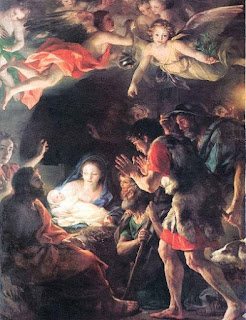
I'd like humbly to suggest that we briefly ponder the actual text about the angels in the Gospel of Luke. Here it is (Luke 2:8-15):
8And in the same region there were shepherds out in the field, keeping watch over their flock by night. 9And an angel of the Lord appeared to them, and the glory of the Lord shone around them, and they were filled with fear. 10And the angel said to them, "Fear not, for behold, I bring you good news of great joy that will be for all the people. 11For unto you is born this day in the city of David a Savior, who is Christ the Lord. 12And this will be a sign for you: you will find a baby wrapped in swaddling cloths and lying in a manger." 13And suddenly there was with the angel a multitude of the heavenly host praising God and saying,
14 "Glory to God in the highest, and on earth peace among those with whom he is pleased!" 15When the angels went away from them into heaven, the shepherds said to one another, "Let us go over to Bethlehem and see this thing that has happened, which the Lord has made known to us."
We could get into a huge argument, I suppose, about the reality of heaven and angels and a God who laid out plans for all this to happen from the very moment He created what we call the universe. But I won't do that. Instead I shall simply ask,
What if it really, really happened?
What if there are angels who can and do appear quite suddenly in the lives of simple people?
What if these strange messengers can indeed come and go to somewhere not that far away, some place called heaven?
What if God is pleased with those who kneel before the Child in adoration?
What if the Child truly brings peace to troubled hearts on earth?
What if the LORD wants us all to join those angels with Him in heaven forever?
I believe that the answer to all those questions is yes, it is true. And in spite of all those other jumbled thoughts, all that craziness stuff that men and women have taught, this is what God has revealed. And I invite you to join me in again this Christmas in affirming its truth.
All that got me to thinking—again—about angels coming from heaven and their presence in our lives. And, since I'm rather hung up with exploring the theological and philosophical roots of Nazism and WW II, I found myself turning over the teachings of Madam Blavatsky. Along with her, of course, came bouncing in all the stuff of Eastern theology: Hinduism and Buddhism, karma, etc. And along with that came the crazy background of the so-called Aryan race, Lemuria, Atlantis, giants and supermen. What a mess of jumbled thoughts. How shall I sort through it all and help you since you stumbled upon this article today?

I'd like humbly to suggest that we briefly ponder the actual text about the angels in the Gospel of Luke. Here it is (Luke 2:8-15):
8And in the same region there were shepherds out in the field, keeping watch over their flock by night. 9And an angel of the Lord appeared to them, and the glory of the Lord shone around them, and they were filled with fear. 10And the angel said to them, "Fear not, for behold, I bring you good news of great joy that will be for all the people. 11For unto you is born this day in the city of David a Savior, who is Christ the Lord. 12And this will be a sign for you: you will find a baby wrapped in swaddling cloths and lying in a manger." 13And suddenly there was with the angel a multitude of the heavenly host praising God and saying,
14 "Glory to God in the highest, and on earth peace among those with whom he is pleased!" 15When the angels went away from them into heaven, the shepherds said to one another, "Let us go over to Bethlehem and see this thing that has happened, which the Lord has made known to us."
We could get into a huge argument, I suppose, about the reality of heaven and angels and a God who laid out plans for all this to happen from the very moment He created what we call the universe. But I won't do that. Instead I shall simply ask,
What if it really, really happened?
What if there are angels who can and do appear quite suddenly in the lives of simple people?
What if these strange messengers can indeed come and go to somewhere not that far away, some place called heaven?
What if God is pleased with those who kneel before the Child in adoration?
What if the Child truly brings peace to troubled hearts on earth?
What if the LORD wants us all to join those angels with Him in heaven forever?
I believe that the answer to all those questions is yes, it is true. And in spite of all those other jumbled thoughts, all that craziness stuff that men and women have taught, this is what God has revealed. And I invite you to join me in again this Christmas in affirming its truth.
Saturday, December 5, 2009
Influence, C. S. Lewis and Sadhu Sundar Singh
In recent days I've shared with you the source of the pride-filled Nazi emphasis upon the supposed Aryan race. The word Aryan comes from the ancient Sanskrit arya and initially referred to those who spoke northern India languages. I've also commented about the influence of C.S. Lewis in my life.
Now today I stumbled upon Sadhu Sundar Singh, an Indian holy man and convert to Christianity who lived and taught around the world in the early years of the twentieth century. Kathryn Lindskoog suggests he had a strong influence upon C.S. Lewis.

Now today I stumbled upon Sadhu Sundar Singh, an Indian holy man and convert to Christianity who lived and taught around the world in the early years of the twentieth century. Kathryn Lindskoog suggests he had a strong influence upon C.S. Lewis.

Commenting upon Lewis' reference to the Sura in That Hideous Strength, Lindskoog asks, "What did Lewis mean by the term Sura? In Sanscrit the word means god. In the Hindu pantheon, a sura is a good angel or genie. In Arabic a sura is one of the 114 chapters of the Koran. Lewis must have known all this when he chose the word. I believe that Lewis used the word sura because he was hinting at the word sadhu, which means a holy man in India. (As an adjective in Sanscrit, sadhu means straight.) If Lewis had actually called his Christian mystic the Sadhu, some readers might have believed that his tale was a true account about the famous Sadhu Sundar Singh.
A bit further in her article Lindskoog continues, "Sundar Singh may have influenced C. S. Lewis in several ways. For example, the name Singh comes from the Sanskrit word for lion. Because Sundar Singh was popularly perceived as the most Christ-like man in Lewis's day, it is possible that Sundar Singh was in the back of Lewis's mind when Aslan the lion came bounding into Lewis's first story of Narnia. (Aslan is the Turkish word for lion.)"
How many of us have been influenced by Lewis? And in recent years how many have loved the tales of Narnia, both in their written form and now as movies? The number reaches into the millions I am certain.
How strange and wondrous are the workings of our Lord who is at work in all things for our good (Romans 8:28). And how great are the blessings that await those of us who have been called by His name (1 Corinthians 2:8-9).
A bit further in her article Lindskoog continues, "Sundar Singh may have influenced C. S. Lewis in several ways. For example, the name Singh comes from the Sanskrit word for lion. Because Sundar Singh was popularly perceived as the most Christ-like man in Lewis's day, it is possible that Sundar Singh was in the back of Lewis's mind when Aslan the lion came bounding into Lewis's first story of Narnia. (Aslan is the Turkish word for lion.)"
How many of us have been influenced by Lewis? And in recent years how many have loved the tales of Narnia, both in their written form and now as movies? The number reaches into the millions I am certain.
How strange and wondrous are the workings of our Lord who is at work in all things for our good (Romans 8:28). And how great are the blessings that await those of us who have been called by His name (1 Corinthians 2:8-9).
Thursday, December 3, 2009
Do Have A Most Joyful Christmas
Earlier this week I had a delightful conversation with my granddaughter about Reepicheep, a mouse character from C.S. Lewis' Chronicles of Narnia series. Reepicheep is a large, talking mouse who carries a rapier and wears a red plume tucked in his golden circlet. He is quite pugnacious and quick to defend any affront to his honor. It was fun to think about that little squirt again.

As we talked I suddenly realized that it has been too long since I've read any of Lewis' books. I must get back into them, because they meant so much to me in my college years way back in the 50s.
I have also been pondering how so many are trying to rob me and you of the joy of Christmas and the wonder of it all.
Then I remembered something hidden back in a dusty corner of my brain. I went there and could only find the rag ends of a quote from Lewis' Surprised by Joy. I had to Google to find it:
"A young man who wishes to remain a sound Atheist cannot be too careful of his reading. There are traps everywhere—'Bibles laid open, millions of surprises,' as Herbert says, 'fine nets and stratagems.' God is, if I may say it, very unscrupulous."
It's not that I ever was an atheist, but I must confess that in those years I wasn't feeling very close to God. He seemed to me to be so full of rules to keep, rules that I wasn't very good at anyway. So I felt more and more distant. Besides feeling quite guilty about all that, I felt rather bored by the whole religion thing.
And then I discovered Lewis! I must agree. One cannot be too careful of his reading if he wants to remain an Atheist—or become one. And so I too, with Lewis' help, was surprised by joy. How amazing it has all been, this journey since those days.
Well, that's what happens when one approaches the end of another year. You start to look back and then wonder what lies ahead. Of course, I know what lies ahead somewhere down the road. I remember this especially as I celebrate Christmas and ponder how that great, wondrous mysterious HE who is the source of all that is, became one with me in my rebellion, confusion, anxiety and death. And I gaze upon Him in His mother's arms and know not what more to say. The only words I can find are from the faithful apostle:
"If we have been united with Him in a death like His, we shall certainly be united with Him in a resurrection like His," (Romans 6:5).
Oh what will that be like, that resurrection, that renewal? Like the little child gazing at all those wonders packaged up in bright paper under the tree, I can hardly wait. Do have a most joyful Christmas!

I have also been pondering how so many are trying to rob me and you of the joy of Christmas and the wonder of it all.
Then I remembered something hidden back in a dusty corner of my brain. I went there and could only find the rag ends of a quote from Lewis' Surprised by Joy. I had to Google to find it:
"A young man who wishes to remain a sound Atheist cannot be too careful of his reading. There are traps everywhere—'Bibles laid open, millions of surprises,' as Herbert says, 'fine nets and stratagems.' God is, if I may say it, very unscrupulous."
It's not that I ever was an atheist, but I must confess that in those years I wasn't feeling very close to God. He seemed to me to be so full of rules to keep, rules that I wasn't very good at anyway. So I felt more and more distant. Besides feeling quite guilty about all that, I felt rather bored by the whole religion thing.
And then I discovered Lewis! I must agree. One cannot be too careful of his reading if he wants to remain an Atheist—or become one. And so I too, with Lewis' help, was surprised by joy. How amazing it has all been, this journey since those days.
Well, that's what happens when one approaches the end of another year. You start to look back and then wonder what lies ahead. Of course, I know what lies ahead somewhere down the road. I remember this especially as I celebrate Christmas and ponder how that great, wondrous mysterious HE who is the source of all that is, became one with me in my rebellion, confusion, anxiety and death. And I gaze upon Him in His mother's arms and know not what more to say. The only words I can find are from the faithful apostle:
"If we have been united with Him in a death like His, we shall certainly be united with Him in a resurrection like His," (Romans 6:5).
Oh what will that be like, that resurrection, that renewal? Like the little child gazing at all those wonders packaged up in bright paper under the tree, I can hardly wait. Do have a most joyful Christmas!
Wednesday, December 2, 2009
Lord, Come Down
If you're anything like me—and I believe you are—you get awfully tired of reading about the problems, suffering, war and death in our world. Today's news is but another part of the same litany: four policemen shot dead and we still don't know who did it; scientists lied and manipulated data about climate change; Iran still threatens to build nuclear weapons.
And so it goes, on and on, like it always has. Think about the past century. How many non-combatants were killed? Piero Scaruffi estimates 160 million died in wars and genocide during the past 100 years! Mao Ze-Dong led in the slaughter of as many as 78 million in China and Tibet. Josef Stalin purged and starved 23 million in Russia and the Ukraine. Hitler's Nazis killed an estimated 12 million. 5 million Japanese civilians died during the reign of Hideki Tojo. I cannot go further. The numbers overwhelm me and I've not spoken of the tens of millions whose lives were shattered, but did not die.
So I am tempted to pray the prayer of Isaiah 64:1-3 and ask the Lord God to come down in majesty and power. Lord, make the mountains tremble and quake at your presence. Be like fire that burns the underbrush of forests and makes water to boil. Let everyone on earth know that you are here and they had better shape up. Do what you once did when ancient Israel gathered before Mount Sinai and trembled at your power and majesty (Exodus 19:16-20). Then people will repent and turn away from their rebellion and sin. Then they will fall down before you and worship you.
But not so, says the Lord. Fear, terror, suffering, death and damnation do not produce repentance and faith. Such things lead only to further hatred, idolatry, despair, revenge and rebellion. Did not ancient Israel see my majesty and glory only to turn away from me again and again in unbelief? Did all of Nazi Germany and Tojo's Japan turn away from their false gods after the defeat of World War II?

How then should the Lord come? We know the answer. We celebrate it throughout this season. And the Word became flesh and dwelt among us, and we have seen his glory, glory as of the only Son from the Father, full of grace and truth (John 1:14).
His glory is that he came to bear our pain, our suffering and our death. Because of his coming we have hope for the future, both in this life and in that to come.
And so it goes, on and on, like it always has. Think about the past century. How many non-combatants were killed? Piero Scaruffi estimates 160 million died in wars and genocide during the past 100 years! Mao Ze-Dong led in the slaughter of as many as 78 million in China and Tibet. Josef Stalin purged and starved 23 million in Russia and the Ukraine. Hitler's Nazis killed an estimated 12 million. 5 million Japanese civilians died during the reign of Hideki Tojo. I cannot go further. The numbers overwhelm me and I've not spoken of the tens of millions whose lives were shattered, but did not die.
So I am tempted to pray the prayer of Isaiah 64:1-3 and ask the Lord God to come down in majesty and power. Lord, make the mountains tremble and quake at your presence. Be like fire that burns the underbrush of forests and makes water to boil. Let everyone on earth know that you are here and they had better shape up. Do what you once did when ancient Israel gathered before Mount Sinai and trembled at your power and majesty (Exodus 19:16-20). Then people will repent and turn away from their rebellion and sin. Then they will fall down before you and worship you.
But not so, says the Lord. Fear, terror, suffering, death and damnation do not produce repentance and faith. Such things lead only to further hatred, idolatry, despair, revenge and rebellion. Did not ancient Israel see my majesty and glory only to turn away from me again and again in unbelief? Did all of Nazi Germany and Tojo's Japan turn away from their false gods after the defeat of World War II?

How then should the Lord come? We know the answer. We celebrate it throughout this season. And the Word became flesh and dwelt among us, and we have seen his glory, glory as of the only Son from the Father, full of grace and truth (John 1:14).
His glory is that he came to bear our pain, our suffering and our death. Because of his coming we have hope for the future, both in this life and in that to come.
Subscribe to:
Posts (Atom)